22 Oct 2008

Photography Holidays in Menorca dates


We've just sorted the dates and prices for the Menorca photography holidays next year and put them on the Photoactive website.
We now get so many people wanting to come back for a second - and sometimes a third time, that we now do two different itineraries - Menorca One and Menorca Two. 

MENORCA ONE
1st - 8th May 2009

MENORCA TWO
18th - 25th Sept 2009 

The cost for both holidays is £1030
It includes:
  • 7 nights at four star S'Algar Hotel inclusive of breakfast and dinner.
  • Airport transfers in Menorca.
  • Transport to locations in Menorca.
  • Entrance fees where necessary 
  • Welcome and farewell drinks.
  • NO single room supplement.
I really love doing these holidays and it would be great to see you.

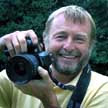
The picture shows Jan, one of the Menorca photographers, getting a little help from one of the locals.

20 Oct 2008

Manual Exposure and buckets of water

I had a student with me the other day who was really keen to get to grips with the 'M' (Manual) exposure mode on his Nikon D60. She felt - with some justification - that having the ability to set the camera's exposure herself would enable her to get better photographs. Well, I explained that this would not necessarily follow as there are many other elements that go into creating a good picture. But I did tell her that an understanding of, and familiarity with, the manual settings on any camera would certainly mean that she would have more control and, eventually, she would be able to interpret a scene in her own way. This can often lead to better pictures.

The problem was that as she had kept the camera on a program mode for most of her photography in the past, she had little understanding of shutter speeds and aperture settings and the way they must work in harmony.

I tried very hard to explain in the simplest possible way that, for instance, an exposure of 1/125sec at f11 lets into the camera exactly the same amount of light as an exposure of 1/25osec at f8. This was part of the age-old problem that f numbers do not work logically for normal people. The fact that big apertures mean small numbers and small apertures mean big numbers is enough to confuse anyone.

And then I remembered a really old chestnut of an explanation...

With much theatrical acting, I placed an imaginary and very full bucket of water on the table in front of us. This, I said represented the correct amount of light to expose our picture correctly. The water was not sloshing out (over-exposed) nor was the bucket half full (under-exposed), it was full to the brim. Just right.

There were two ways of filling that bucket with a hose pipe (more acting) - I might use a big wide hose pipe (wide aperture) and fill the bucket very quickly (fast shutter speed). Or I could use a very small diameter hose pipe (small aperture) and trickle the water in very slowly (slow shutter speed).

Either way, I got the same amount of water in the bucket (or the same amount of light in the camera).

It worked like a charm - the penny dropped and from that moment my student understood a concept that had been totally confusing her. I do like simple.

I've posted a fair bit about using manual exposure in the past, so you could try these pages if you want to learn more...


16 Oct 2008

RAW v JPEG

post removed

13 Oct 2008

Compact camera settings

I mentioned last week that from time to time I would post a few tips about using compact cameras.  I'm often asked just how I set up my own compact cameras, so here is a list of just how my little Canon Ixus 960IS is configured right now.


Please bear in mind that these settings suit me. They may not suit you. I know the camera well and I find it no problem to change things quickly when I need to - that is one of the keys to good camera craft... KNOW YOUR CAMERA!!! I cannot stress too much just how important this is.


Running down the Menu in the M (Manual) mode, my list goes like this...

CAMERA MENU SETTINGS
AF Frame - Centre
AF Frame size - Normal
Digital Zoom - Off
Slow Synchro  - Off
Red Eye - Off
Auto ISO Shift - Off
AF assist Bean - Off
Review - 2 secs
Review Info - Off
Auto Category - On
Display Overlay - Off
IS Mode - Shoot only

TOOL SETTINGS
Sound - Mute
Touch Icons - 0n
LCD Brightness - medium
File Numbering - continuous
Auto Rotate - Off
Lens retract - 1 minute

In the FUNCTION SET menu I set things up mostly like this...
M - Manual
Exposure Compensation -1/3 ( I find Canon cameras almost always over expose a bit.)
AWB ( although I regularly change this)
My Colours - Off
Centre Weighted exposure Mode
S - Superfine quality]
L - Large file 4000 x 3000 pixels.

So there you go... you will see that I turn off a lot of auto functions that are mostly unnecessary.
Give it a go 

9 Oct 2008

People, horses and underground photography


Just to give you an idea of the sort of high standards my students have reached, I have posted here some photographs by Maria Falconer and Mark Esling. The pictures were taken during our latest photography holiday in Menorca. Both photographers have been to Menorca before, in fact, this was Maria’s third time. Each time she produces a fantastic set of photographs, and this year was no exception.


It is worth mentioning that although some of the photographers on these holidays have reach a very high standard, beginners are definitely not excluded. This may surprise some of you, and you may think that this will hold back the more advanced in the group, but the system works extremely well. You see, these holidays are very much about sharing, and having an enjoyable experience. No one is left out, and everyone is encouraged to produce pictures way above the level they think they can achieve. The results can be seen in my recent posts – in particular the pictures by Jeanette Suddard. Jeanette was a complete novice at the beginning of the week when she arrived in Menorca, but the pictures she produced by the end of the week demonstrate very clearly what can be done with tuition and encouragement in a relaxed atmosphere.

Maria Falconer has been coming to me for coaching for four years and she is now a highly competent photographer who is taking on many commissions. As the two portraits here show, Maria is a very gifted people photographer. However, her close-up of the horse’s teeth is an indication of her enquiring mind and her persistence once she gets a picture idea in her head. In fact I am trying to adjust Maria’s way of getting so utterly wrapped up in one aspect of a visual situation that she might easily miss out on other outstanding picture opportunities. I have no doubt she will work this out of her system very soon. Her pictures have a sensitivity and vitality that I find very refreshing and hugely rewarding.

Maria would love to hear from you on the forum she moderates – this was actually started by a group of photographers who came to Menorca, but anyone with an interest in good photography is welcome.

This was Mark Esling’s second trip to Menorca. He is the sort of chap who works away quietly and happily in almost any situation until he gets the picture he wants. He is very determined to achieve good pictures because he gets so much pleasure from photography.

His picture of the horse being hosed down with water after a race is an absolute corker. He shot straight into the light and this backlight has highlighted the spray. But, for me, the most important aspect f the shot is the timing. That horse is relishing the treatment and it shows.

His picture in the underground labyrinth of the old fort of La Mola is another cracker. The exposure is spot on and the composition just about perfect. La Mola is a regular location for our photography in Menorca, but the place is so vast that each time we go we see new places and things to photograph.

I have put together a short video of the photographers in Menorca and next week I will post it on YouTube and embed it in the blog. It should give you a real taste of the things we photograph and how much fun we have.

6 Oct 2008

Light and wine in Menorca


I have two very different pictures to show you this time from the group on the Menorca photography holiday. I was particularly delighted to see Ian Smith’s photograph (below) taken at the trotting races because of the way he has captured the wonderful backlight. This was Ian’s second time with me to Menorca and I have seen a tremendous advance in the way he is capturing the world around him on this trip. He is now constantly aware of the light direction and quality and always trying to improve his framing and composition. His efforts are really paying off. Just look at the way he has caught the light shining through those translucent cart wheels. The contrast of this brightness with the dark shadows under the trees has really brought drama and power to the picture.

In complete contrast, Phil Hallam took the top photograph in pretty flat light conditions when we visited the Binifadet bodega. The old lorry was parked outside the bodega and the blues and purples have helped make a very eye-catching image. I love the simplicity of this shot, which conjures up all sorts of impressions of the Mediterranean life-style despite the lack of sun light.

Pictures by Phil Hallam and Ian Smith

2 Oct 2008

Photographing horses in Menorca

One of the great photo opportunities we often enjoy on our photography holidays in Menorca is the chance to photograph horses – very special horses. We spend some time at the trotting races, where we are welcomed to visit the stables and photograph the race preparations. We use the races themselves as exercises in panning technique and I teach everyone the art of ‘following through’ with the camera as the subjects race past – very much like the ‘follow though’ in a golf swing. This has produced some fantastic shots… you may remember Maria Falconer’s action-packed picture I posted some time ago. Click here.

Now most photographers need a fair bit of help and practice to perfect the panning technique, but on our latest holiday we had one snapper, George Greenhill, who amazed us all with his panning accuracy. Even when the horses were racing past us a top speed, the horses and riders were always perfectly framed in every picture he took. It was uncanny just how easy he found it to get great panned action pictures.

I expected that George had done this before, so I asked him where he had learned the technique.

“In the army,” said George, “I was a machine gunner”.

I would hate to be on the receiving end of Georges sure-fire technique.

Menorca is famous for, among other thing, its dancing horses. These jet black beauties are taught the most extraordinary dressage routines and to rear up on their hind legs. The horses are a great attraction at fiestas and weddings. Our photography group was lucky enough to witness a wedding party at our hotel at which the rearing horses were to be a great attraction.

The party was held at night in the street outside the Hotel, so the light was just about as difficult as it could possibly be. But just look at these two photographs produced by Ken Terry – fantastic pictures that have captured the wonderful atmosphere of the event. Ken used his new Canon EOS-1D Mk111. He pushed the ISO right up to 3200 and was able to shoot at 1/30sec at f3.2

There are more pictures and stories from Menorca to come.

These holidays have proved a great success and if you’d like to join us next year please let me know as soon as possible. I’ll be putting the dates and costs up on the photoactive website very soon.

Pictures by Ken Terry and George Greenwell

28 Sept 2008

Photography holiday in Menorca

Photographs by Jeanette Suddard

Well, we came to the end of another photography holiday in Menorca the other day, and I think I can say that everyone had a wonderful time. There was just one new student in the group this time – Jeanette. She came with partner Phil, who has been to me for tuition in Scotland. Of course, Jeanette was naturally nervous to begin with because she is a beginner, but she quickly realised that the way I run these photography holidays is anything but formal.

And what fantastic progress Jeanette made over the week. At the start she had no understanding at all about shutter speeds or apertures; knew nothing about colour temperature, the direction of light or depth of field. However, Jeanette possessed the most vital ingredients for successful photography – she had a natural eye for a picture, she was mad keen to learn, and she just loved taking photographs.

I would like to think that after just one week working with me and with the help of all the others in the group – these holidays really are a sharing experience – Jeanette is now well along the way to becoming not only a competent photographer, but a photographer who can capture something special.

I’ll be showing you some of the pictures taken by the group in forthcoming posts – I think you will agree that some of the shots are really outstanding. But that is to be expected when among the team were regular Photoactive snappers Ken Terry and Maria Falconer. Some of their photographs are just superb. Among the subjects tackled and the places visited were underground chambers, a winery at Binifadet, and a horse trotting event. We worked in a whole variety of light including flash and mixed temperature light - just wait till you see some of the pictures that were produced.

The top photograph shows just how well Jeanette’s eye was working. She spotted this dramatic shot as we were waiting for the daylight to fade and the street lights to come on so that we could photograph ‘mixed light’.

The bottom photograph demonstrates a keen eye for pattern and colour… very well done Jeanette